

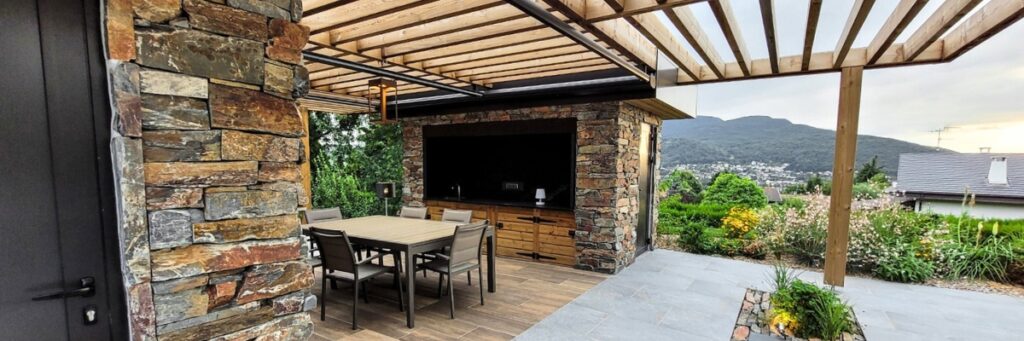
Bernardos phyllite is a natural stone particularly well suited to mountain architecture, both in traditional buildings and contemporary projects. Its technical performance, durability, and ability to blend into the landscape make it a benchmark material in environments with demanding climatic conditions.
In residential and architectural projects in mountain areas, phyllite performs effectively under extreme conditions such as snow, frost, heavy rainfall, and sudden temperature changes, maintaining its properties over time.
Technical properties of phyllite in mountain environments
Phyllite combines a set of characteristics that make it especially suitable for this type of architecture:
High weather resistance: its low porosity and impermeability allow phyllite to withstand continuous freeze–thaw cycles without deterioration.
Superior durability: when properly installed, phyllite can exceed a 100-year service life, aging naturally and requiring minimal maintenance.
Landscape integration: its texture, color, and natural origin enable harmonious integration into mountain landscapes and protected environments.
Natural and sustainable material: phyllite is a long-lasting natural stone, reducing environmental impact compared to less durable construction solutions.
Good thermal performance: it contributes to indoor comfort, helping retain heat in winter and coolness in summer. It is also resistant to fire and humid environments.
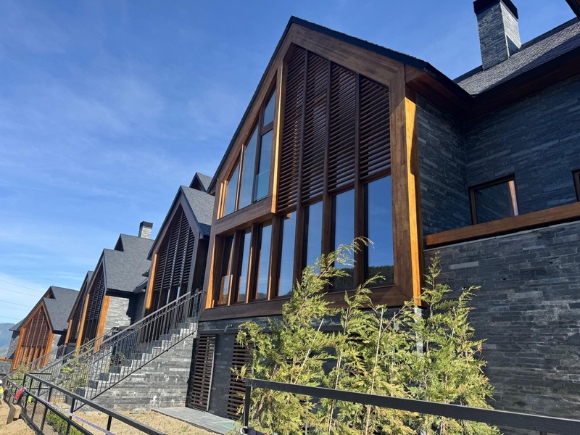
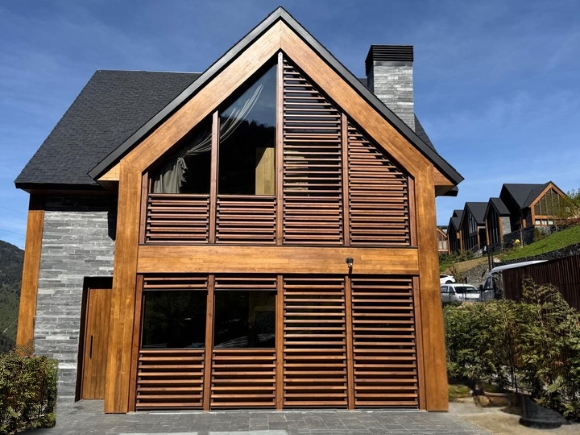
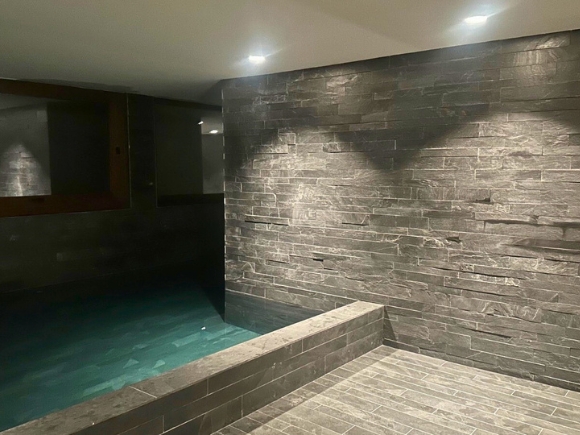
Applications of phyllite in mountain architecture
Thanks to its versatility, Bernardos phyllite is used in multiple construction and decorative solutions:
Slate for roofing
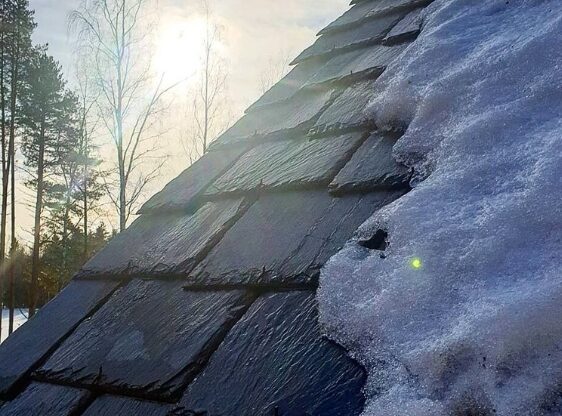
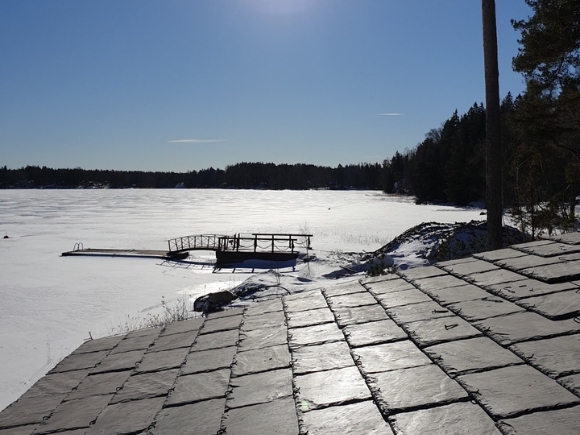
Slate for roofing is one of the most common uses of phyllite in mountain architecture. To meet the demands of snow, cold, and high rainfall, thicker pieces (approximately 8 mm), slopes greater than 30°, stainless steel fixings, and safety systems such as hooks, snow guards, or snow retention bars are used.
Natural stone façades
Phyllite allows for various façade solutions adapted to the technical and aesthetic needs of each project:
- Ventilated façades, which improve the building’s thermal insulation and provide a solid, contemporary appearance with controlled aging.
- Mortared stone façades, particularly effective on ground floors, where they protect against moisture and snow accumulation.
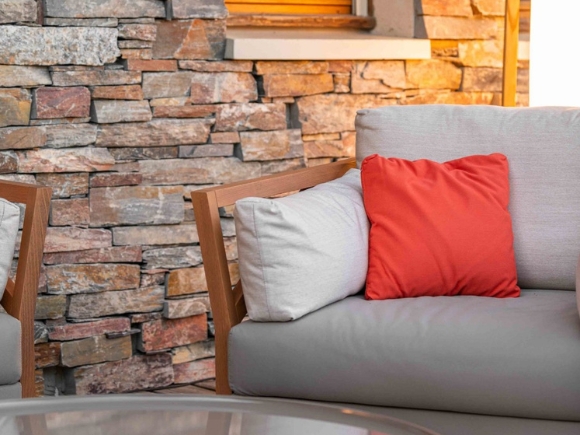
- Phyllite masonry walls, a traditional construction technique in mountain areas that remains in use due to its strength, character, and authenticity.
Phyllite paving
Phyllite is used as paving both outdoors and indoors. Outdoors, it is common in paths, access areas, and terraces due to its strength and slip-resistant properties. Indoors, it offers high performance in heavily used spaces and is especially suitable for underfloor heating systems thanks to its good thermal conductivity.
Decoration with phyllite
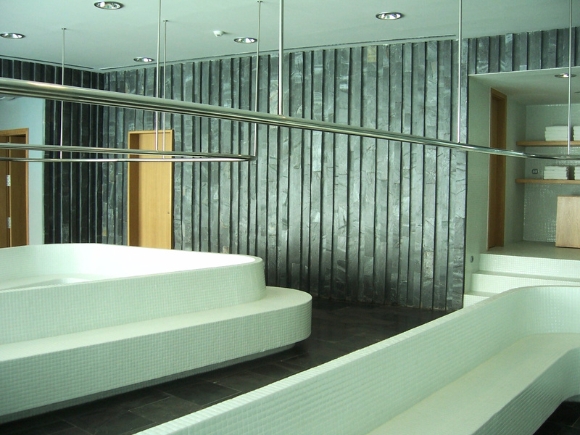
In addition to its structural use, phyllite is ideal for resolving numerous architectural and decorative elements: window sills, lintels, stairs, outdoor kitchens, garden furniture, and interior cladding such as fireplaces and wall finishes.
Bernardos phyllite in established projects
Over time, Naturpiedra has supplied Bernardos phyllite for mountain architecture projects in various regions of Europe — the Pyrenees, the Alps, and Scandinavia — as well as in Spain in areas such as the Central System, Sierra Nevada, and the Cantabrian Mountains. The material’s long-term performance confirms its suitability for buildings exposed to demanding climatic conditions.
Nordic countries are one of Naturpiedra’s main markets, where phyllite is highly valued for its advantages as a construction material for extreme climates.
Frequently asked questions about Bernardos phyllite
Why is Bernardos phyllite suitable for mountain architecture?
Because it is a highly resistant natural stone with low porosity and great durability, capable of withstanding snow, frost, and sudden temperature changes while maintaining its performance over time.
What applications is phyllite used for in mountain architecture?
Phyllite is used in roofings, ventilated façades, mortared stone façades, masonry walls, paving, and decorative solutions, both outdoors and indoors.
Is phyllite suitable for roofs with snow?
Yes. Phyllite is commonly used for roofs in mountain areas, provided it is installed with the appropriate thickness, slope, and safety systems for snow and ice conditions.
What advantages does phyllite offer compared to other stone materials?
Phyllite stands out for its durability, good thermal performance, landscape integration, and proven use in mountain architecture projects across Spain and Europe, supplied by Naturpiedra.